
Key Insights
- Itching is an evolutionary warning system of the body.
- Special C-nerve fibers transmit itching signals via histamine and inflammatory mediators.
- Scratching temporarily relieves itching through mechanical stimulation.
- However, long-term scratching damages the skin barrier.
Table of Contents
- What Itching Really Is – And Why Your Skin Is Drawing Your Attention To It
- The Most Common Triggers for Itching – From Impaired Skin Barrier to Systemic Diseases
- Acute vs. Chronic – Why the 6-Week Limit Changes Your Treatment Strategy
- Immediate Relief: What Really Helps with Acute Itching in the First 30 Minutes
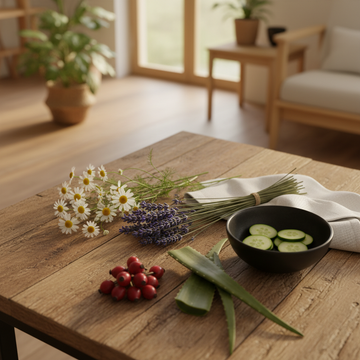
- Plant-Based Active Ingredients with a Scientific Basis – What Hemp, Aloe, and Calendula Can Really Do
- Medical Treatment Options – When Over-the-Counter Remedies Are Sufficient and When Specialists Are Needed
What Itching Really Is – And Why Your Skin Is Drawing Your Attention To It
The Biological Protective Function Behind the Unpleasant Signal
Itching arises from the activation of special C-nerve fibers in the skin, which react to histamine, substance P, and other inflammatory mediators. This evolutionary protective function warned our ancestors of parasites and harmful substances – a survival advantage that often becomes a burden today. Bestselling products offer targeted support to effectively alleviate the symptoms.
The crucial difference to pain: while pain signals are rapidly transmitted via A-delta fibers, itching uses slower C-fibers. That's why scratching works as a distraction – the mechanical stimulation overrides the itching signal in the spinal cord. Those looking for quick solutions will find widely proven help among the best-selling products.
Pruritus cum materia vs. sine materia – Itching with Visible Signs or Without
Pruritus cum materia presents with skin changes such as hives, redness, or blisters. These visible indications significantly facilitate identifying the cause – from contact allergies to neurodermatitis.
Pruritus sine materia, on the other hand, occurs without recognizable skin changes and often points to systemic diseases: liver problems, kidney failure, or neurological disorders. This distinction significantly determines the treatment strategy.
The Most Common Triggers for Itching – From Impaired Skin Barrier to Systemic Diseases

Main Dermatological Causes and Their Identifying Features
Xerosis (dry skin) leads the itching statistics – especially during heating periods, trans-epidermal water loss increases dramatically. The impaired lipid barrier allows irritants to penetrate and intensifies inflammatory reactions. Products for strengthening the skin barrier can provide targeted relief here.
Atopic dermatitis manifests as a chronic inflammatory barrier disorder with a tormenting itch-scratch cycle. Contact allergies develop delayed 48-72 hours after exposure – fragrances, preservatives, and nickel are major culprits. Those who want to learn more about the connection between neurodermatitis and itching can find further information in the article "what helps with neurodermatitis".
| Cause Category | Typical Symptoms | Timeline | Diagnostic Indicators |
|---|---|---|---|
| Xerosis | Scaling, tightness | Immediately upon dryness | Worsening during heating periods |
| Atopic dermatitis | Redness, lichenification | Chronic, episodic | Family history, elevated IgE |
| Contact allergy | Sharply defined areas | 48-72h after contact | Patch test positive |
| Urticaria | Wheals, transient | Minutes to hours | Histamine-mediated |
Systemic and Neuropathic Triggers Often Overlooked
Liver and kidney diseases cause itching due to the accumulation of bile acids and urea in the skin, respectively. Diabetes mellitus and thyroid disorders significantly affect skin moisture and barrier function.
Neuropathic itching arises from nerve damage without skin involvement – particularly after shingles or other neurological conditions. In these cases, a targeted medical examination is crucial to identify the cause and initiate appropriate therapy.
Acute vs. Chronic – Why the 6-Week Threshold Changes Your Treatment Strategy
Acute Itching: Self-Limiting and Usually Harmless
Acute itching appears suddenly and usually resolves on its own within a few days to two weeks. Typical triggers include insect bites, contact with nettles or cleaning agents, and temporary allergic reactions to new cosmetics. The treatment goal is rapid symptom relief through cooling compresses, antihistamine gels, or soothing plant extracts. Soothing plant extracts can specifically help with relief.
Self-treatment is sufficient as long as there are no widespread skin changes, shortness of breath, or mucosal swelling. Red flags are severe facial swelling, nausea, or circulatory problems – these require immediate medical attention.
Chronic Itching: A Distinct Clinical Picture After 6 Weeks
Dermatologists refer to itching lasting longer than six weeks as chronic pruritus – a distinct clinical picture with altered nerve pathways. The pathophysiology differs fundamentally: sensitized C-fibers develop an "itch memory," whereby even minimal stimuli can trigger severe symptoms.
Chronic itching requires multidisciplinary diagnostics, as systemic causes such as liver, kidney, or thyroid diseases can be underlying. Long-term consequences of untreated chronic itching include lichenification (skin thickening due to constant scratching), pigment changes, and significant psychological distress, even leading to depression. Those interested in other chronic conditions can find helpful tips in the article "what helps with joint pain."
Immediate Relief: What Really Helps with Acute Itching in the First 30 Minutes
The Cold Method – Used Specifically for Maximum Effect
Cold interrupts itch signals by superposition: cold receptors transmit faster impulses than itch nerves, thus blocking transmission to the brain. Wrap an ice pack in a thin cotton cloth and cool the affected area for 5-10 minutes, then take a 15-minute break.
Ice cube massage works by circular movements without direct skin contact for 1-2 minutes. For sensitive skin, cooling hydrogel pads are the gentler alternative – they cool more gently and for a longer duration. Cooling hydrogel pads are particularly recommended for sensitive skin.
Restore Moisture Barrier Immediately – The 3-Minute Rule
Wet skin is maximally absorbent for nourishing active ingredients, but without a protective layer, it dramatically loses moisture. After water contact, only pat the skin dry, never rub it. Within three minutes, apply a rich emollient – this barrier effect reduces transepidermal water loss by up to 40%.
Use at least a hazelnut-sized portion per body region. Hemp seed oil, with its ideal omega-3/6 ratio, is particularly well-suited as it absorbs quickly and strengthens the lipid matrix of the stratum corneum.
Distraction Techniques and Scratch Alternatives
Scratching provides brief relief but damages the skin barrier and exacerbates inflammation. Scratch blocks or textured surfaces offer mechanical alternatives without skin damage. The pressure technique works by firmly pressing a fingernail without scratching.
Immediate Tip: Rhythmic tapping on the itchy area interrupts nerve signals as effectively as scratching. At night, cool cotton gloves help, especially for children.
Natural First Aid from the Kitchen
Black tea compresses use tannins for an astringent effect: Steep two black tea bags for 10 minutes, let them cool to body temperature, and apply them directly to the itchy area for 15 minutes. The tannins draw inflammatory fluid from the tissue and soothe irritated nerve endings.
Potato slices contain natural starch and potassium, which soothe skin irritations. Place raw slices directly on affected areas and leave for 10 minutes.
Oatmeal bath provides full-body relief: Stir 200g of finely ground oats into lukewarm bathwater and bathe for 15-20 minutes. The beta-glucans form a protective film on the skin. Those interested in further natural home remedies for muscle discomfort can find inspiration in the article "what helps with muscle soreness."
Plant-Based Active Ingredients with Scientific Basis – What Hemp, Aloe, and Calendula Can Really Do

Hemp Seed Oil and Cannabinoids: Barrier Repair at the Molecular Level
Hemp seed oil contains omega-3 and omega-6 fatty acids in an optimal 1:3 ratio, which strengthens the lipid matrix of the stratum corneum. Gamma-linolenic acid demonstrably reduces transepidermal water loss by up to 30% and makes the skin more resistant to itch-triggering factors. Phytotherapy for inflammatory skin diseases provides further scientific background on this.
Non-psychoactive cannabinoids like CBD have an anti-inflammatory effect via the body's own endocannabinoid system. Applied twice daily to damp skin, the effect is particularly evident in chronically dry, neurodermatitis-prone skin. H4H Naturals relies on fair-trade certified hemp seed oil in its Organic Skincare Range for maximum purity and sustainability.
Aloe Vera: Cooling Polysaccharides for Acute Soothing
The acemannan complex in pure aloe gel promotes skin regeneration and binds moisture long-lastingly. The immediate effect arises from evaporative cooling and anti-inflammatory enzymes that weaken histamine reactions.
Purity is crucial: use only gels with at least 95% aloe content without additives. Apply thinly to affected areas, 2-3 times daily before moisturizing cream for optimal penetration.
Calendula officinalis: Traditional Wound Healing Meets Modern Dermatology
Triterpene saponins and flavonoids in marigold have an anti-inflammatory effect and promote the epithelization of damaged skin areas. Particularly effective is "what helps with itching" for micro-injuries from scratching and weeping eczema. Further scientific information on effective medicinal plants for dermatological diseases can be found in this specialized article.
Applied as an ointment or CO₂ extract in a cream base, the combination with chamomile synergistically enhances the soothing effect. Application is 2-3 times daily to cleansed skin.
Probiotic Ferments: The New Generation of Skin Barrier Care
Lactic acid bacteria lysates stabilize the skin microbiome and regulate the pH value to the optimal range of 5.5. Prebiotic components "feed" the skin's natural protective flora and strengthen its defense function against pathogenic germs.
Study Result: Probiotic skincare reduced itch scores by an average of 40% after 4 weeks in patients with atopic dermatitis. H4H integrates these findings into its Skin Solutions Range with probiotic-infused Formulas.
Medical Treatment Options – When Over-the-Counter Remedies Suffice and When Specialists Are Needed
Over-the-Counter Topicals: Active Ingredients and Their Optimal Application Strategy
Over-the-counter topicals such as hydrocortisone, polidocanol, or menthol offer targeted relief for mild to moderate symptoms. Those interested in further natural approaches to joint problems can find practical tips in the article "what helps with osteoarthritis."
Frequently Asked Questions
What are the biological mechanisms behind itching and why does skin react to it?
Itching arises from the activation of specific C-nerve fibers in the skin that respond to neurotransmitters such as histamine and inflammatory mediators. These signals serve as an evolutionary warning system that protects the skin from potential dangers like parasites or harmful substances, thus drawing attention to irritating stimuli.
Which plant-based active ingredients effectively help with itching and how do they support skin regeneration?
Plant-based active ingredients such as hemp, aloe vera, and calendula have anti-inflammatory and moisturizing effects, which soothe irritated skin and promote the natural regeneration of the skin barrier. Their combination of antioxidant and skin-calming properties helps alleviate itching and strengthens the skin long-term.
How can one distinguish between itching with visible skin changes (pruritus cum materia) and without (pruritus sine materia) and why is this important?
Pruritus cum materia manifests with visible skin changes such as redness, wheals, or blisters, which facilitates identifying the cause and usually indicates local skin problems. Pruritus sine materia occurs without visible changes and can point to systemic diseases, which is why this distinction is crucial for choosing the appropriate treatment strategy.
What are common causes of itching and how do the symptoms differ in dry skin, atopic dermatitis, and contact allergies?
Dry skin (xerosis) causes itching due to a disturbed skin barrier and increased water loss, often accompanied by rough, scaly patches. Atopic dermatitis presents with chronically inflamed, reddened, and intensely itchy skin areas. Contact allergies lead to localized redness, wheals, and blisters that appear after contact with allergenic substances.

